
Why the Scale Won't Move, Even When You're Doing Everything Right
The number on your bathroom scale hides more than it shows. Here's what it's missing, and the smarter scale people are switching to.
This article is sponsored by Hume Health. Product details come from Hume and haven't been independently tested by TrustBrand.
Six weeks in, you're doing everything right. You've eaten better, walked more, lifted a few times a week and skipped the second glass of wine. Your jeans feel a little looser. Then at 7 a.m. you step on the scale, wait for the number, and there it is: almost exactly where it was a month ago.
You step off. You step back on, as if it might have made a mistake. Same number.
If you've had that morning, you're far from alone. And here's the part almost nobody tells you: the scale probably isn't wrong. It's just answering the wrong question.
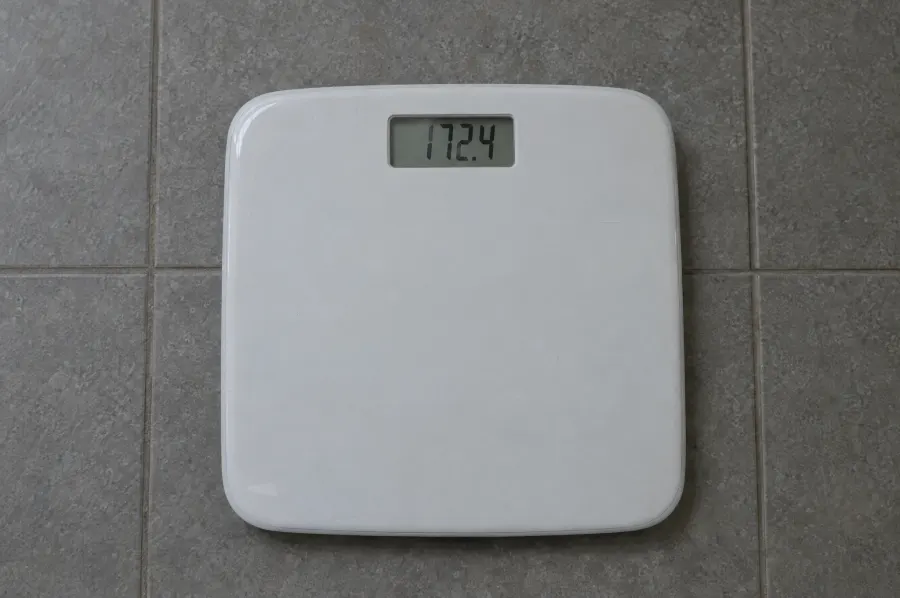
Your scale weighs everything at once
A bathroom scale does one job: it measures how hard you press on the floor. That number is the sum of everything you're made of. Muscle, fat, bone, organs, the water in your body, and yes, last night's dinner.
Some of those things change fast. Your body's water can swing by a few pounds from one day to the next, depending on how much salt you ate, how well you slept, how hard you trained, or the time of the month. That alone can hide a week of real progress.
Then there's the bigger problem. If you're training, you may be building muscle while you lose fat. On a regular scale, those two changes cancel out. The number sits still, and it looks like nothing is working, when in fact your body is changing in exactly the way you wanted.
Two people can both weigh 172 pounds and have completely different bodies. A regular scale can't tell them apart.
It works the other way too. If weight is coming off quickly, through a strict diet or a GLP-1 medication, some of what you're losing can be muscle. The scale celebrates. Your strength quietly disagrees.
What you actually want to know
When you step on a scale, the real questions are almost never "how much do I weigh?" They're closer to these:
- Am I losing fat, or just water?
- Am I keeping, or building, muscle?
- What about the fat I can't see, the visceral fat around my organs?
- Is one side of my body weaker than the other?
A regular scale can't answer any of them.
The usual workarounds, and why they fall short
People try all sorts of ways around this. The mirror is honest but slow, and you see yourself every day, so change is hard to notice. A tape measure helps, but it's fiddly and easy to get wrong. Skin calipers depend heavily on who's pinching.
Some gyms have an InBody machine, which is a good option if you're there and it's free. And then there's the gold standard: a DEXA scan, the low-dose X-ray body scan used in clinics and research. It's excellent. It also means booking an appointment, driving somewhere, and paying out of pocket, often $50 to $150 or more each time. Most people get one, maybe twice a year.
Twice a year is a snapshot. What actually keeps you going is seeing the trend, week after week.
Then the bathroom scale grew handles
Most "smart" scales already try to estimate body fat. They send a tiny, painless electrical signal up one leg and down the other and measure how easily it travels. Water-rich muscle lets it through more easily than fat does. It's called bioimpedance, and it's been used for decades.
The catch is that a signal running only through your legs mostly measures your lower body. Everything above your waist is an estimate.
That's why a newer kind of scale adds handles. You stand on it, hold the handles out in front of you, and the signal runs through your arms and torso as well. Now the scale can report each arm, each leg and your trunk separately, much like the machines you'd find in a clinic or a serious gym.
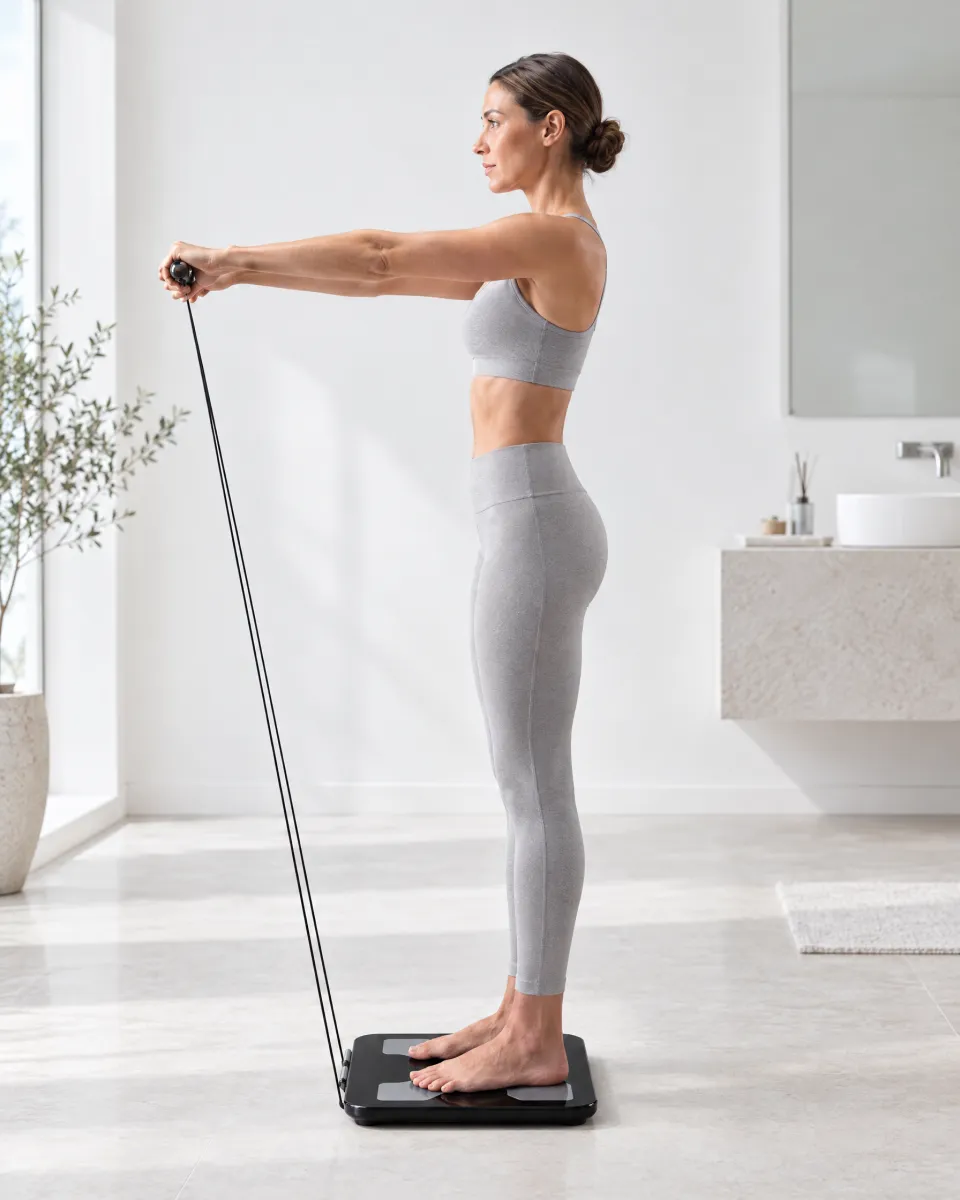
The one we keep hearing about is the Hume Pod 2.0.
Meet the Hume Pod 2.0
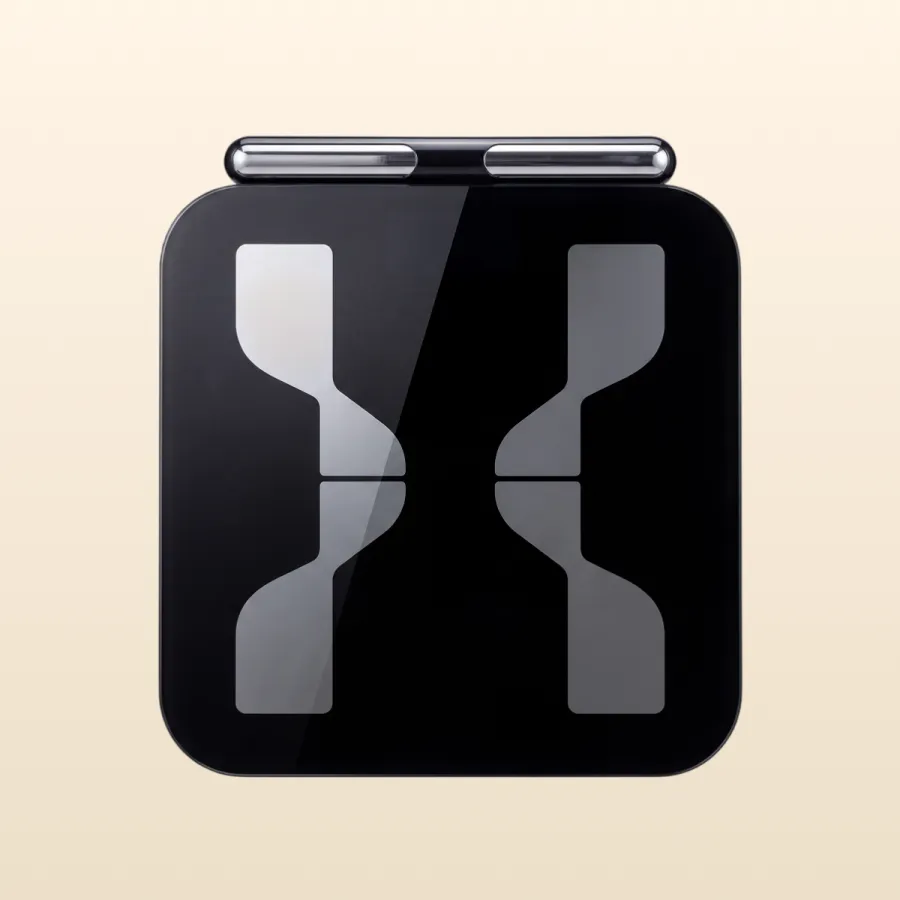
On the outside, it looks like a sleek, square glass scale. The difference is the pair of handles that pull out from the front edge. According to Hume, it uses 8 contact points and 8-frequency sensing, and every weigh-in reports 45 body metrics in a free app, including:
- Body fat percentage and skeletal muscle mass
- Visceral fat, body water, bone mass and metabolic age
- Separate muscle and fat readings for each arm, each leg and your trunk
It syncs with Apple Health and Google Fit, works for the whole household with separate accounts, and charges up to a year at a time, according to Hume. You don't need a subscription. Hume Plus, at $9.99 a month, adds coaching if you want it.
What changes when you can see it
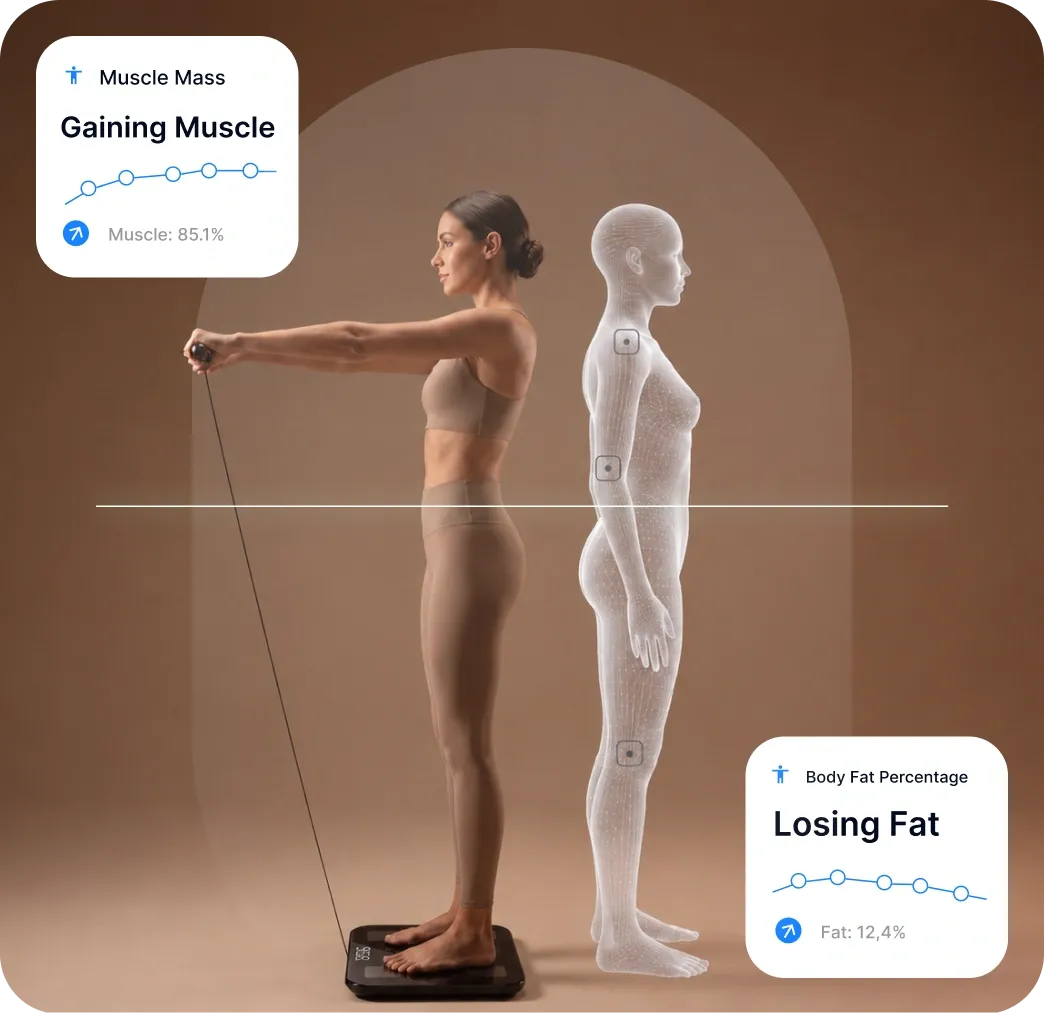
Go back to that frustrating morning. With a body composition scale, the same flat weight tells a different story. You might see body fat drift down a point, muscle tick up, and water explain the rest. The scale didn't move. You did.
That's the real value of a scale like this. It isn't about the number on any single morning. It's about the trend over a few weeks, and knowing which of your habits are actually working.
Who it's especially useful for
People who lift or train. Seeing muscle go up while fat comes down is the best motivation there is, and it's invisible on a normal scale.
Anyone losing weight quickly. Many people on GLP-1 medications now track lean mass to make sure they're keeping muscle. According to Hume's own 2024 analysis of 6,990 Hume Plus members, lean mass made up an average of 16.9% of weight lost. That's an internal analysis, not a peer-reviewed study, and members also used Hume's coaching. Talk to your doctor about any medication and weight goals.
Anyone over 40. Muscle naturally becomes harder to keep as we age, and it matters for strength, balance and metabolism.
Families. One scale, separate accounts, no extra cost per person.
What owners say
We read through reviews from verified buyers on Hume's website. A few that stood out:
"I had a DEXA scan three hours after using the Body Pod, with a light breakfast in between. The Body Pod showed 10.9% body fat and the DEXA showed 11.1%."
"Was skeptical at first but I was actually blown away at how accurate this is to my gyms inBody scan."
"I also love the fact that you use it for multiple members in the family without any additional cost"
Individual experiences; your results will differ.
The fine print
No product is perfect, and you should know the downsides before you buy. Hume's customer support is mainly by email, and some reviewers say replies can be slow. Reviewers also report paying return shipping themselves. And while the free app covers your readings, coaching and some deeper insights sit behind the optional Hume Plus subscription.
For most people who want to know what's really happening under the number, those are small trade-offs.
Hume Pod 2.0
- Free shipping, usually out in 1 to 3 business days
- 45-day returns on orders from Hume
- HSA and FSA eligible
- 1-year warranty included
Price checked October 3, 2026 and set by Hume. It may change.
P.S. If you have money left on an FSA, check your plan's deadline. Many are use-it-or-lose-it at the end of the year, and Hume lists the Pod 2.0 as HSA and FSA eligible. It's an easy way to turn leftover pre-tax dollars into something you'll use every morning. Check today's price.